
Posted on Leave a comment

Protecting Your Brain: The New Fight to Keep Our Thoughts Private

Your thoughts were once the only place where you had absolute, unbreakable privacy. No matter what laws were passed or who was watching, your inner mind belonged completely to you. But today, incredible new technology is learning how to peek inside.

This new technology uses something called a Brain-Computer Interface (BCI). A BCI creates a direct highway between the human brain and electronic devices. It works by listening to the tiny electrical signals your brain sends out, recording them, and figuring out what they mean.

Because of this, BCIs can actually translate your thoughts into real-world actions. For example, a person could move a computer cursor or control a robotic arm just by thinking about it, without moving a single muscle.

  • High-tech companies like Neuralink are working hard to make these systems even more powerful—not just reading brain activity, but potentially sending signals back into the brain, too.

Does our law actually protect “mental privacy” or “thought privacy”?

If a computer can read what is happening inside your head, does the law protect your thoughts the same way it protects your text messages, your home, or your personal diary? Right now, as technology races ahead, lawmakers around the world are scrambling to figure out how to shield our ultimate private space—our own minds—from being tracked or hacked.

Brain-Computer Interfaces (BCIs) are amazing tools that can read the tiny electrical signals inside your brain. When you think, your brain makes electrical sparks. A BCI catches those sparks and turns them into digital computer codes. Then, it sends those codes to machines, letting people control things just by using their thoughts—without moving their bodies at all!

Right now, these tools are mostly used by doctors to help sick or injured people. For example, if someone’s body is paralyzed and they cannot move, a BCI can help them type messages on a screen or move a robotic arm just by thinking about it.

  • But things are changing fast. Big tech companies, like Neuralink, are trying out new ideas to bring this technology to everyday people, not just patients in hospitals.
  • Instead of just fixing a problem or helping someone heal, scientists are exploring how these tools might actually give human brains “superpowers.” This is called cognitive enhancement (making your brain work even better). Imagine being able to remember things faster or download information straight to your mind!
  • Because this technology is moving from doctors’ offices into regular life, it is creating big new questions for lawmakers. People are starting to wonder: how do we make rules for technology that doesn’t just heal the human mind, but actually changes how it works?

As brain-computer interfaces become smarter, we have to look closely at a big difference between two kinds of privacy.

The first kind is data privacy. This is about protecting the everyday information you create when you use a smartphone, buy things, or click on links online. The world is already working on rules to protect this kind of information.

The second kind is thought privacy, which is also called mental privacy. This is something much deeper and more personal. It is your absolute right to have an inner life inside your head that belongs completely to you—a place that no machine can ever read, track, or record.

Think of the difference like this: data privacy protects the things you choose to share with the world, but thought privacy protects the secrets you never want to say out loud at all.

Virtual Chief Information Security Officer (vCISO)

It is a highly experienced cybersecurity manager who gives companies expert safety advice without being hired as a full-time worker.

Lots of companies need a wise leader to protect their digital information, but they either don’t need one every single day or simply cannot afford the high salary of a full-time executive. A vCISO solves this problem. They step in to guide the company’s cybersecurity plans, manage digital safety risks, and make sure all official technology laws are followed.

A vCISO is different from a regular consultant who only helps with one quick project. Instead, they become a trusted, long-term advisor. They work closely with company bosses, tech teams, and partners to make the business safer from hackers, lower the chances of digital mistakes, and help the company stay strong for the future.

A great vCISO knows how to do much more than just fix computers. They truly understand how businesses operate, what official government regulators expect, and how technology safety choices can affect the whole company.

What is being protected?

Your personal information, like bank records, where you travel, websites you click on, and text messages.

The raw electrical signals inside your brain, including your emotions, what you plan to do, and secret thoughts.
Posted on Leave a comment

The Super-Fast Web: How Elementor Made Websites Load Instantly

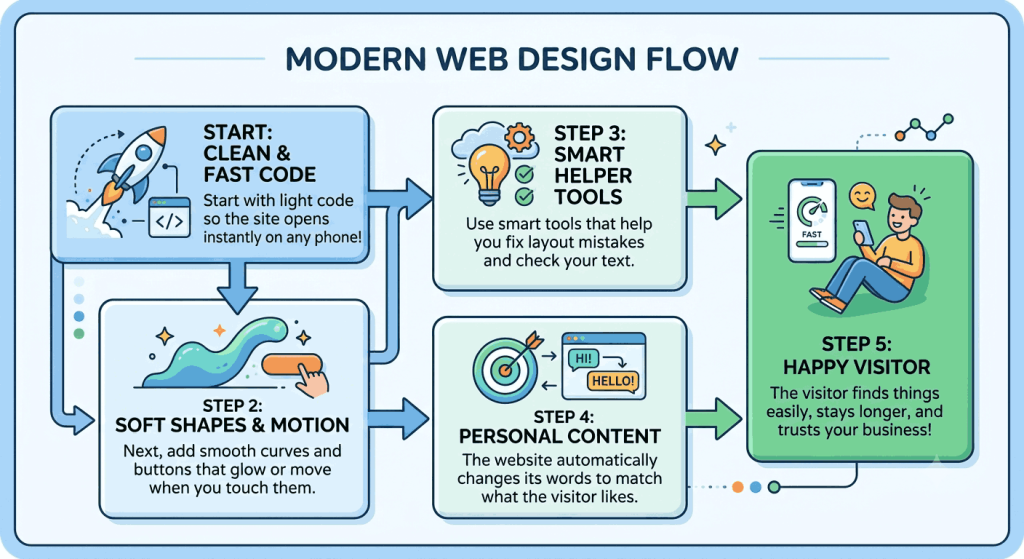
According to the official Elementor report, web design is changing in major ways. Websites are moving away from cold, stiff, and boxy structures. Instead, modern websites now focus on softer looks, human connection, and smart tools. This shift makes the internet feel more welcoming while forcing websites to load much faster than before. If you want to build a successful website today, your design must prioritize smooth user experiences and fast mobile speeds over messy decorations.

One of the biggest changes is how we use shapes and motion. Web creators are stepping away from traditional rigid grids. They are now using organic lines, flowing shapes, and soft color blends to make pages feel natural and unique. At the same time, movement on a page is now used as a helpful guide rather than a distracting trick. Websites use gentle animations, like buttons that change smoothly when your mouse hovers over them, to show users exactly where to click next. These simple motions keep visitors happy and make navigating a website easy and fun.

Technology is also becoming much smarter and more personal. Artificial Intelligence is no longer just a tool for writing short sentences. It now acts like a helpful design partner directly inside your workspace to improve page layouts and build clean code snippets on the fly. This works together with new personalization features. These features allow a single web page to automatically change its headings, pictures, or product offers based on what the visitor likes or where they clicked from.

Finally, modern web design places a massive focus on speed and kindness. Because search engines reward fast pages, websites must be built with light code structures so they pop up instantly on mobile phones. Creators are also treating web accessibility as a strict rule. This means sites are intentionally built to work perfectly for everyone, including people who need screen readers or prefer dark mode screens, creating an internet that is fast, beautiful, and open to all.

Modern Web Design Process

1.Using Soft Curves, Color Blends, and Playful Layouts:

For a long time, most websites looked exactly the same. They were filled with stiff squares, sharp corners, and straight lines that made the internet feel cold and robotic. Today, web design is changing to feel much more welcoming and alive. By using soft curves, flowing natural shapes, and smooth color blends, creators can build pages that feel comfortable to look at. Instead of locking everything into a strict, boring grid, these playful layouts let images and text overlap in fun ways. This style helps the website feel closer to real human life. When a website uses warm color transitions and gentle, curving paths, it acts less like a rigid computer machine and more like a friendly digital storybook. It catches the reader’s eye right away and keeps them interested without hurting their eyes. This design choice shows that a website can look professional while still showing a fun, unique personality that people like and trust.

  • Feels Warm and Friendly: Swapping out sharp, robotic boxes for natural shapes and soft colors makes your website feel much more welcoming to regular visitors.
  • Keeps People Looking: Playful layouts break the boring rules of standard design, which naturally guides the viewer’s eyes down the page and helps them notice your important messages.

2.Websites That Do the Work for You:

AI is completely changing how we build websites. In the past, creators just made still, quiet pages that never changed. Now, they are building smart websites that can think, move, and grow on their own. These websites can automatically change their layouts, their words, and their pictures based on who is looking at them.

Instead of writing code for every single change, web creators can now use smart tools to give the website its own logic. This means pages can look at live data and change themselves instantly for different groups of visitors. The human creator simply sets up the main rules and the basic framework, and then the smart tools do all the hard adjusting behind the scenes.

This new way of building turns website creators into managers. Using advanced tools like Elementor AI and Angie, creators design the main rules instead of doing boring, repetitive tasks. The smart tools take care of the heavy lifting. They refresh old text, make the pages load faster, and fix user experiences without needing a human to click anything. This creates a much smarter web that feels alive, and it lets human creators focus on planning big ideas and telling great stories.

Get to the live with Elementor :

  1. Updates Everything Automatically: Angie can quickly change text, update search engine descriptions, and apply new prices or coupon discounts across many different pages and products all at once.
  2. Designs Massive Changes Instantly: You can change the colors and fonts of your entire website just by describing your style or uploading a color paper. You can also add fun movements like bounces or glows to images and buttons, or ask Angie to build full sections like review pages and contact boxes with just one typed sentence.