What Is Website Infrastructure?
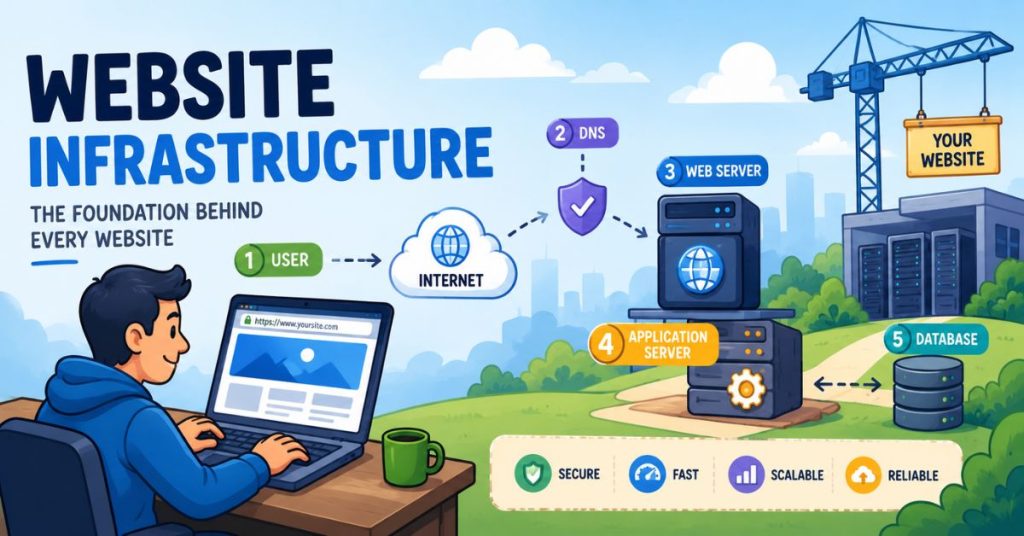
Have You Ever Wondered? When you open a website, everything feels instant. Pages load. Images appear. Buttons work. It feels simple. But here’s something most people never think about: What makes a website actually work behind the screen? Not design. Not colors. Not text. Something deeper. Something invisible. That system is called website infrastructure. And once you understand it, the internet suddenly stops feeling like magic and starts feeling like a system you can actually understand. Website infrastructure is the foundation of a website that includes hosting, domain, servers, security, and tools that keep the website running smoothly online. Let’s Start With a Simple Idea Think about a shopping mall. When you walk inside, you see: Everything looks smooth and clean. But what you don’t see is: Without these, the mall would collapse. Website infrastructure works the same way. What Is Website Infrastructure? Website infrastructure is the complete technical foundation that makes a website work on the internet. It includes everything that helps a website: Think of it like the “invisible engine” of a website. Simple Breakdown A website infrastructure usually includes: Why Website Infrastructure Matters Most people focus only on design. But design is just the surface. Behind every successful website, infrastructure decides: Domain Name: The Address of Your Website A domain is how people find your website. For example: Without domains, we would need to type long numbers like: 192.168.1.1 That would be impossible to remember. Web Hosting: Where Your Website Lives Now imagine this: You have an address… but no house exists there. That’s what happens without hosting. Web hosting is the place where your website files are stored. It keeps: Servers: The Real Power Behind Websites Servers are powerful computers. They: CMS: The Control System A CMS helps you build websites without coding. The most popular one is WordPress. It allows you to: Website Security: Protecting Everything Now imagine someone breaking into your house. Scary, right? The same happens online too. Hackers try to: That’s why security is part of infrastructure. It includes: Website Speed: Why It Matters So Much Let’s be honest. If a website is slow, people leave. Simple as that. A fast website: What slows websites down? Website Infrastructure vs Website Design Design Infrastructure What users see What makes it work Colors, layout Hosting, server, security Front-end Back-end system How Everything Works Together Let’s connect the full system: Key Takeaways
What Is a Domain Name?
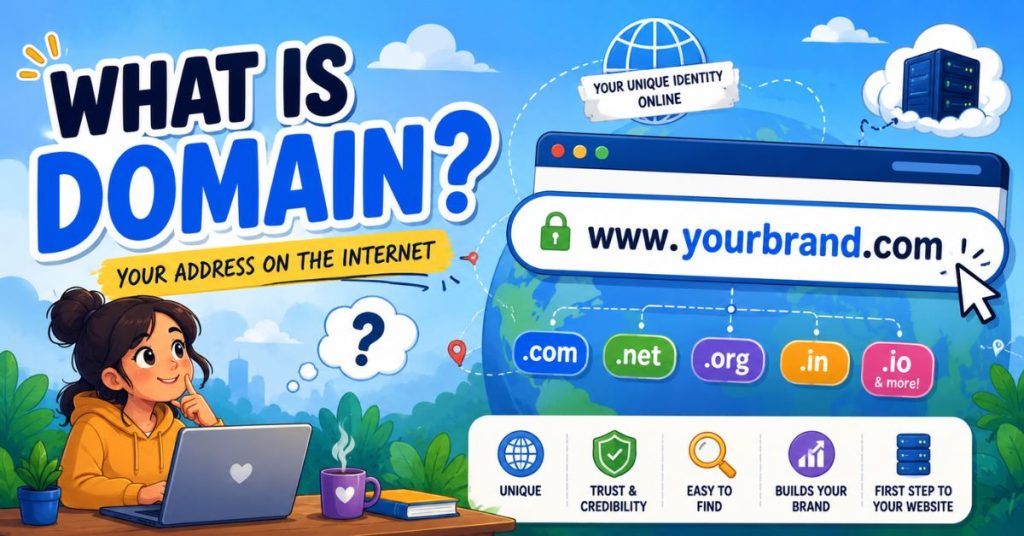
Have You Ever Thought Of It? When you type something like youtube.com, you don’t really think about what’s happening. You just type it… and boom, the website opens. But behind that simple action, there’s something important working silently. Something that makes the internet usable for humans. That “something” is called a domain name. But let’s not jump into definitions. First, let’s understand the problem it solves. Imagine This for a Second… Think of a giant city. Not a normal city — but a city so big that it contains billions of houses. Each house belongs to someone different. Now here’s the strange part: What if none of these houses had addresses? No street names. No house numbers. Nothing. How would you find your friend’s house? You’d probably get lost forever. That’s exactly what the internet would be like without domain names. A complete mess. So the internet needed a system. A way to give every website a name and address that humans can remember. That’s where domain names come in. So, What Is a Domain Name? A domain name is the human-friendly name of a website. It is what you type in your browser to visit a site. For example: These are not random words. They are addresses of websites, made easy for humans. Without domain names, you would need to remember numbers like: 192.168.1.1 Why Domain Names Even Exist A Real-Life Analogy You’ll Never Forget What Does a Domain Name Look Like? A domain usually has two parts: 1. Name Example: google, amazon, facebook 2. Extension Example: .com, .org, .net So when you see: google.com Small Insight Domain Name vs Website Domain Name Website Address Actual building Helps people find site Contains content Example: google.com Google search engine itself Domain vs Hosting Now let’s go one level deeper. If domain is the address… Then hosting is the land. Without land, you cannot build a house. Without hosting, your website has nowhere to live. So: What Happens When You Type a Domain? Let’s break the process like a story: How Do You Get a Domain Name? It’s actually simple: And now the name is yours (for a limited time). You usually renew it every year. Tips for Choosing a Good Domain FAQs Key Takeaways What’s Next? Now that you understand domains, the next big question is: Where does a website actually live? That’s where web hosting comes in. And once you understand hosting, you’ll finally see how websites are built step by step — like a real digital house