What Is Website Infrastructure?
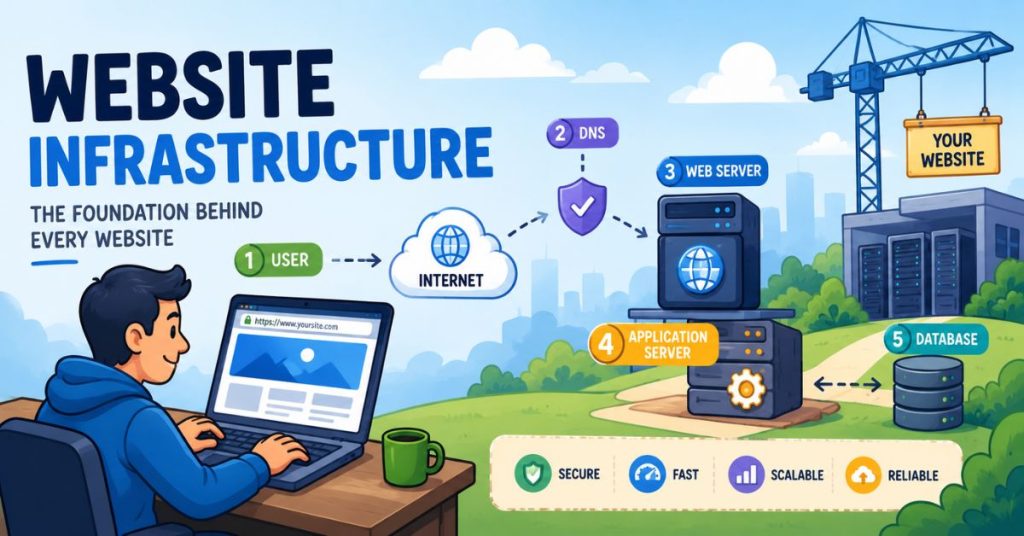
Have You Ever Wondered? When you open a website, everything feels instant. Pages load. Images appear. Buttons work. It feels simple. But here’s something most people never think about: What makes a website actually work behind the screen? Not design. Not colors. Not text. Something deeper. Something invisible. That system is called website infrastructure. And once you understand it, the internet suddenly stops feeling like magic and starts feeling like a system you can actually understand. Website infrastructure is the foundation of a website that includes hosting, domain, servers, security, and tools that keep the website running smoothly online. Let’s Start With a Simple Idea Think about a shopping mall. When you walk inside, you see: Everything looks smooth and clean. But what you don’t see is: Without these, the mall would collapse. Website infrastructure works the same way. What Is Website Infrastructure? Website infrastructure is the complete technical foundation that makes a website work on the internet. It includes everything that helps a website: Think of it like the “invisible engine” of a website. Simple Breakdown A website infrastructure usually includes: Why Website Infrastructure Matters Most people focus only on design. But design is just the surface. Behind every successful website, infrastructure decides: Domain Name: The Address of Your Website A domain is how people find your website. For example: Without domains, we would need to type long numbers like: 192.168.1.1 That would be impossible to remember. Web Hosting: Where Your Website Lives Now imagine this: You have an address… but no house exists there. That’s what happens without hosting. Web hosting is the place where your website files are stored. It keeps: Servers: The Real Power Behind Websites Servers are powerful computers. They: CMS: The Control System A CMS helps you build websites without coding. The most popular one is WordPress. It allows you to: Website Security: Protecting Everything Now imagine someone breaking into your house. Scary, right? The same happens online too. Hackers try to: That’s why security is part of infrastructure. It includes: Website Speed: Why It Matters So Much Let’s be honest. If a website is slow, people leave. Simple as that. A fast website: What slows websites down? Website Infrastructure vs Website Design Design Infrastructure What users see What makes it work Colors, layout Hosting, server, security Front-end Back-end system How Everything Works Together Let’s connect the full system: Key Takeaways
What Is a Domain Name?
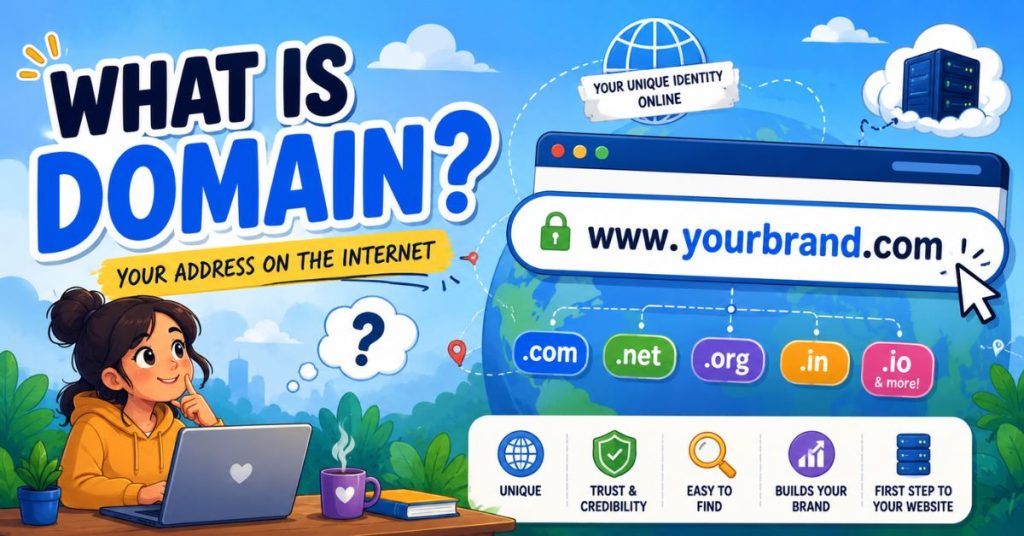
Have You Ever Thought Of It? When you type something like youtube.com, you don’t really think about what’s happening. You just type it… and boom, the website opens. But behind that simple action, there’s something important working silently. Something that makes the internet usable for humans. That “something” is called a domain name. But let’s not jump into definitions. First, let’s understand the problem it solves. Imagine This for a Second… Think of a giant city. Not a normal city — but a city so big that it contains billions of houses. Each house belongs to someone different. Now here’s the strange part: What if none of these houses had addresses? No street names. No house numbers. Nothing. How would you find your friend’s house? You’d probably get lost forever. That’s exactly what the internet would be like without domain names. A complete mess. So the internet needed a system. A way to give every website a name and address that humans can remember. That’s where domain names come in. So, What Is a Domain Name? A domain name is the human-friendly name of a website. It is what you type in your browser to visit a site. For example: These are not random words. They are addresses of websites, made easy for humans. Without domain names, you would need to remember numbers like: 192.168.1.1 Why Domain Names Even Exist A Real-Life Analogy You’ll Never Forget What Does a Domain Name Look Like? A domain usually has two parts: 1. Name Example: google, amazon, facebook 2. Extension Example: .com, .org, .net So when you see: google.com Small Insight Domain Name vs Website Domain Name Website Address Actual building Helps people find site Contains content Example: google.com Google search engine itself Domain vs Hosting Now let’s go one level deeper. If domain is the address… Then hosting is the land. Without land, you cannot build a house. Without hosting, your website has nowhere to live. So: What Happens When You Type a Domain? Let’s break the process like a story: How Do You Get a Domain Name? It’s actually simple: And now the name is yours (for a limited time). You usually renew it every year. Tips for Choosing a Good Domain FAQs Key Takeaways What’s Next? Now that you understand domains, the next big question is: Where does a website actually live? That’s where web hosting comes in. And once you understand hosting, you’ll finally see how websites are built step by step — like a real digital house
What Is WordPress? The Ultimate Beginner’s Guide to Building Websites
Imagine this… You want to build your own little house. But there’s a problem… You don’t know how to use bricks, cement, or tools. Now imagine someone gives you LEGO blocks instead. You just follow the instructions on the manual and build your house easily. That is exactly what WordPress does… but for websites. It helps you build websites without knowing coding. No hard work. No confusing stuff. Just simple clicks. WordPress is a simple tool that helps you build websites without coding.You just click, type, and choose designs like building with LEGO blocks. TABLE OF CONTENTS What Is WordPress? WordPress is a tool that helps you make websites easily. You don’t need to write code. You click. You choose. You publish. What WordPress Actually Does? WordPress takes care of all the hard tech stuff like: So you can focus on: Why WordPress Is So Popular? 40%+ of the web runs on WordPress. Blogs. Stores. Brands. Everything. Why? Because it’s simple to start, but powerful enough to scale. What Can You Build With WordPress? You can build almost anything online: How WordPress Works? WordPress works like 3 simple things: Thing Simple Meaning Real-Life Example What It Does Domain Website address yoursite.com Helps people find your website Hosting Land where website lives Plot of land Stores all website files (images, text, code) WordPress Website builder tool House builder Helps you design and manage your website How to Build a Website Here’s what happens behind the scenes: Step 1: You buy hosting This is your “space online”. Step 2: You install WordPress Now you have your website system. Step 3: You choose a design (Theme) This decides how your site looks. Step 4: You add features (Plugins) Like buttons, forms, shopping carts. Step 5: You add content Text, images, videos. Step 6: You publish Your website goes live. Themes and Plugins Themes = Looks They control: Plugins = Superpowers They add features like: Think of it like this: Common Beginner Mistakes Avoid these: Myth vs Truth ❌ Myth ✔ Truth WordPress is only for blogs It builds ANY website You need coding You don’t need coding It is old It powers modern websites today FAQs KEY TAKEAWAYS AND NEXT STEPS Now you know what WordPress is. But this is just the beginning. Next, you should learn: Because once you understand these, you can build ANY website you want.
What Is Web Hosting? A Complete Beginner’s Guide
You click a website… it loads in seconds. You never think about what’s happening behind the scenes. But here’s a question most beginners never ask: Where does that website actually live? Not on Google. Not “on the internet.” And definitely not floating in space. There’s a real machine somewhere—working 24/7—that stores every image, line of code, and button you see. And if that machine stops working? The website disappears instantly. That invisible machine is what we call web hosting… and once you understand it, the internet starts to look very different. Quick Answer Box (Read This First) Web hosting is a service that stores your website files (text, images, code) on a powerful computer called a server and makes them accessible on the internet 24/7. Think of it like: Without hosting, your website simply cannot exist online. But here’s where it gets interesting… Most beginners think hosting is just “storage.” It’s actually more like a live delivery system for your website. Let’s break that down. Why Web Hosting Actually Matters (More Than You Think) Imagine this: You design a beautiful website. Perfect colors. Great content. Everything is ready. But you don’t have hosting. Reality Check:A website without hosting is like a shop with no physical location. It exists—but customers can’t find it. Did You Know? Every time someone opens a website: All of this happens before you even blink. That’s web hosting working silently in the background. But there’s a deeper layer most beginners miss… Not all hosting is equal. And that changes everything. How Web Hosting Actually Works (Step-by-Step) Let’s make this super simple. Step 1: You upload your website First, you take your website files — things like images, HTML, CSS, and scripts — and upload them to a hosting provider. Think of it as placing your website into a secure digital storage system. Step 2: Your files are stored on a server Once uploaded, your website lives on a server — a powerful computer designed to stay online 24/7 without interruption. This server is what keeps your website accessible at all times. Step 3: Your domain is connected to the server Next, your domain name (like yourwebsite.com) is linked to that server. So when someone types your website address, the internet knows exactly where to look. Step 4: Your website loads in seconds Now comes the magic moment. The server receives the request, finds your website files, and instantly sends them to the visitor’s browser. Within seconds, your website appears on their screen — fully loaded and ready to use. Mini Scenario You open “example.com” Behind the scenes: Feels instant. But it’s actually a chain reaction happening globally. And here’s the twist… The speed of your website depends heavily on your hosting quality. Types of Web Hosting (And Why Beginners Get Confused) Now things start to get real. Not all hosting is the same. In fact, choosing the wrong type can slow your website down or even crash it. Let’s simplify it: 1. Shared Hosting (Beginner Level) Multiple websites share one server. Like renting an apartment with many roommates 2. VPS Hosting (Growing Websites) A physical server is divided into virtual sections. Like having your own apartment inside a building 3. Dedicated Hosting (Advanced) You get the entire server. Like owning the entire building 4. Cloud Hosting (Modern Standard) Your website runs on multiple connected servers. Like a business that expands space instantly when customers arrive Hosting Type Speed Cost Best For Shared Low–Medium Low Beginners VPS Medium–High Medium Growing sites Dedicated Very High High Large businesses Cloud High Flexible Modern scalable websites Common Mistake Beginners Make Most people choose hosting based only on price. That’s like choosing a car only by its paint color. Reality Check:Cheap hosting often leads to: And Google does notice speed. Here’s where it gets interesting… Hosting doesn’t just store your website—it affects your Google ranking. Myth vs Fact Myth: “Hosting is just storage space.” Fact: Hosting also controls: So yes… hosting is part storage, part engine. What Makes Good Web Hosting? If you’re choosing hosting, don’t just look at price. Look for: Beginner Checklist: Real-World Analogy (This Will Make It Click) Think of your website like a Netflix movie. If Netflix servers go down…You can’t watch anything. Same with hosting. No hosting = no website. Beginner Decision Framework (Use This Before Buying) Ask yourself: Simple rule: Start small, but choose something scalable. Because upgrading later is normal—but migration mistakes are not fun. Common Web Hosting Mistakes Let’s quickly fix what most beginners get wrong: Reality Check:Most website problems are hosting problems in disguise. FAQ: What Beginners Always Ask 1. Do I need hosting for every website? Yes. Every live website needs hosting. 2. Can I host a website for free? Yes, but: 3. Is hosting the same as a domain? No. 4. Can I change hosting later? Yes, but it requires migration (moving files + databases). 5. What happens if hosting expires? Your website goes offline until renewed. The Bigger Picture (Most People Miss This) Web hosting is not just a technical service. It’s the foundation of your entire online presence. Without it: And here’s the final insight most beginners only realize later: Your website is only as strong as the server it runs on.